Work About Process Contact
Back to all work

Retail: Groceries & Consumer Goods — 2025

Item Management

A complete redesign of the handheld item management experience for 100,000+ retail employees across 9,551 stores.

A complete redesign of a handheld item management system used by 100,000+ retail employees across 9,551 stores - improving efficiency, reducing errors, and increasing employee satisfaction.

Duration

3 months

Team

3 people

My Roles

Lead UX Designer Custom Component Designer Accessibility Lead

Deliverables

User Flows / Wireframes / Hi-fidelity Mockups / Interactive Prototypes

Tools

Figma / Mural / UserTesting

Year

2025

The Challenge

Overview

The existing item management system was a patchwork of legacy interfaces, leading to high error rates, slow task completion, and frustrated employees. Our goal was to create a unified, intuitive experience that streamlined workflows while adhering to strict accessibility standards and future-proofing for FSMA (FDA Food Safety Modernization Act) regulations.

To comply with my non-disclosure agreement, I have omitted sensitive information, including research documentation, personas, and journey maps. All information in this case study is my own and does not necessarily reflect the views of ADUSA.

Phase 01

Discovery & Research

We conducted extensive research into the FDA Food Safety Modernization Act (FSMA) traceability requirements, mapping how each regulation, from Critical Tracking Events to Key Data Elements, would impact daily item management workflows across 9,551 stores. Through interviews with store associates, compliance officers, and supply chain teams, we identified the gaps between existing handheld processes and the incoming FSMA Rule 204 mandates for end-to-end food traceability.
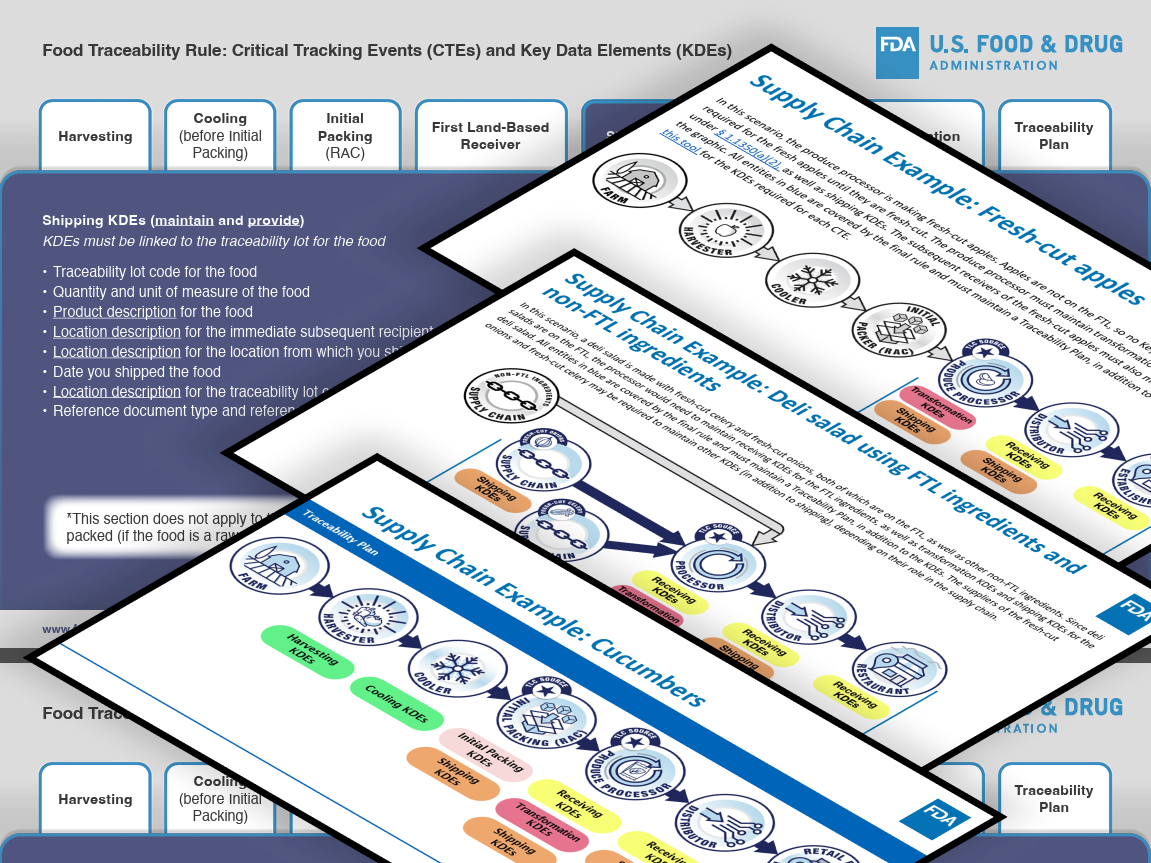
FDA FSMA Traceability KDEs and Supply Chain Mapping
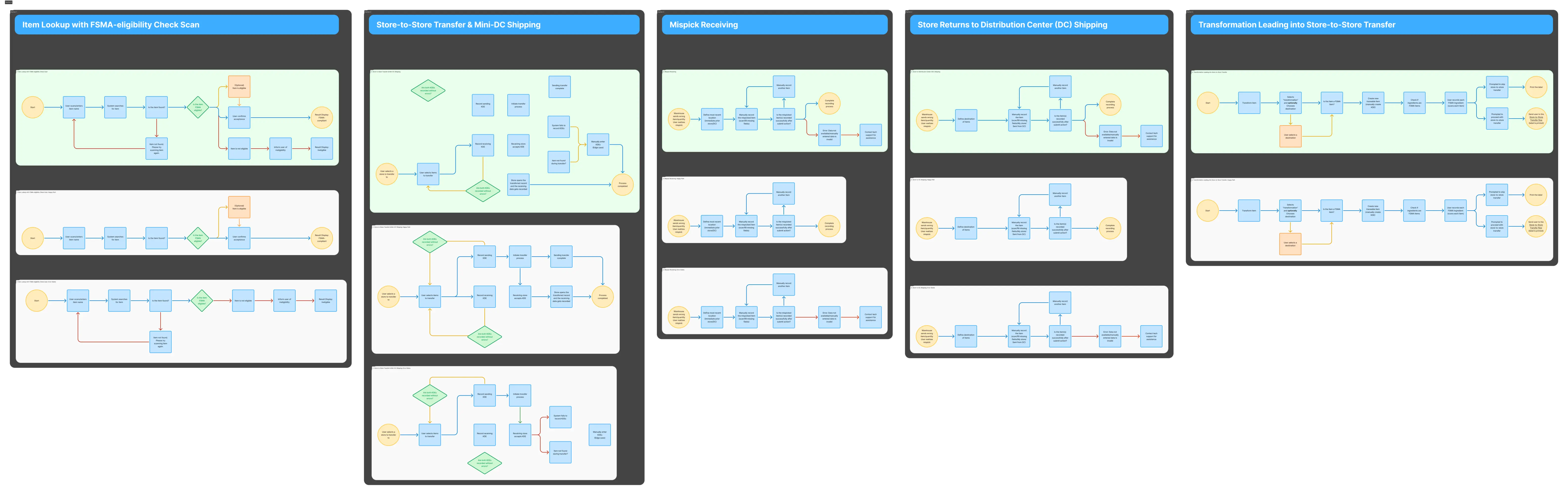
FSMA Traceability User Flows

Phase 02

Wireframing

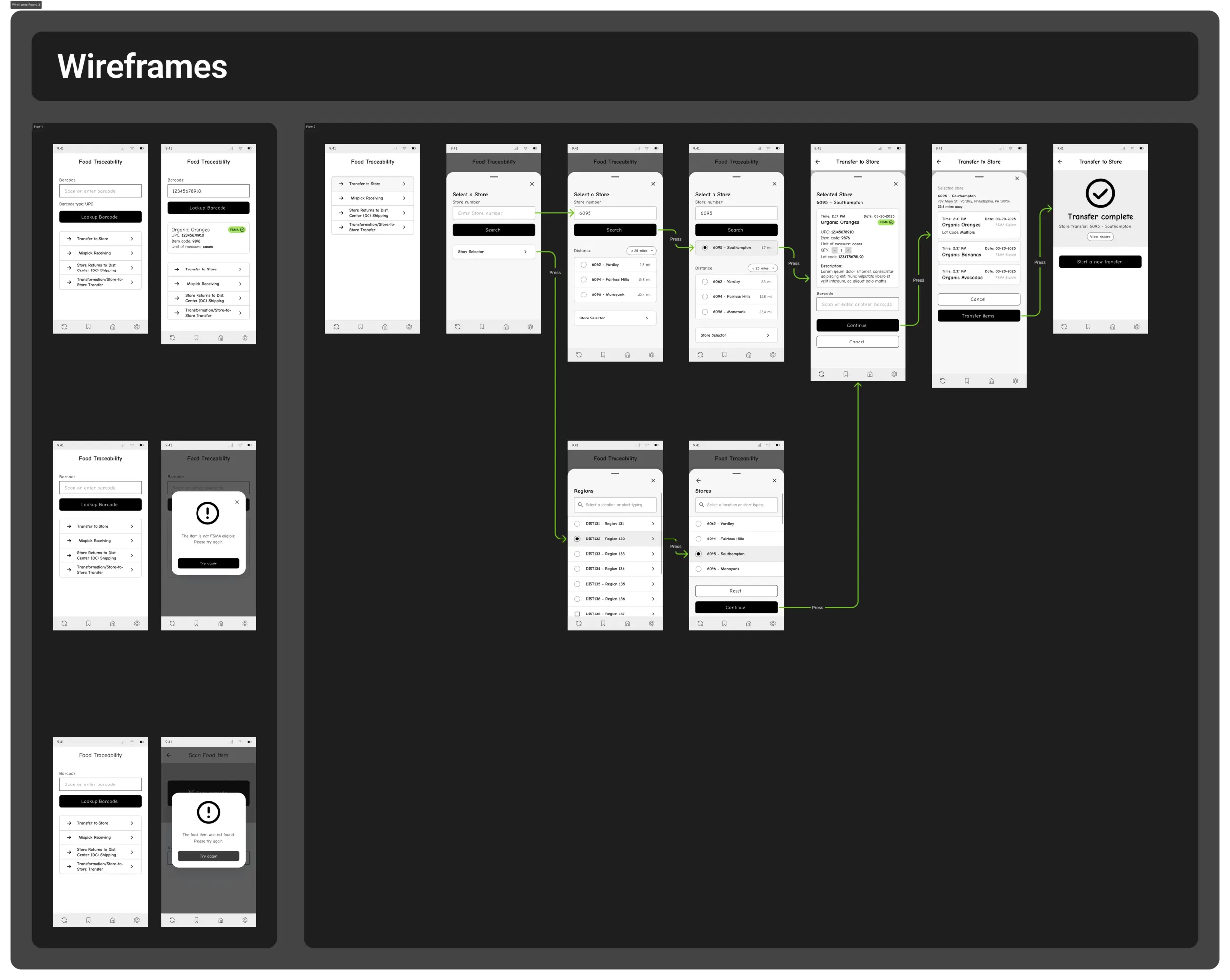
We translated FSMA Rule 204 compliance requirements into low-fidelity wireframes for the handheld item management screens, mapping all possible user paths from eligibility check scans, store to store transfers, mispick receiving, store returns, and transformation to store to store transfer. Iterative rounds with stakeholders validated that traceability tasks could be completed much more efficiently.

FSMA Item Management wireframe flows

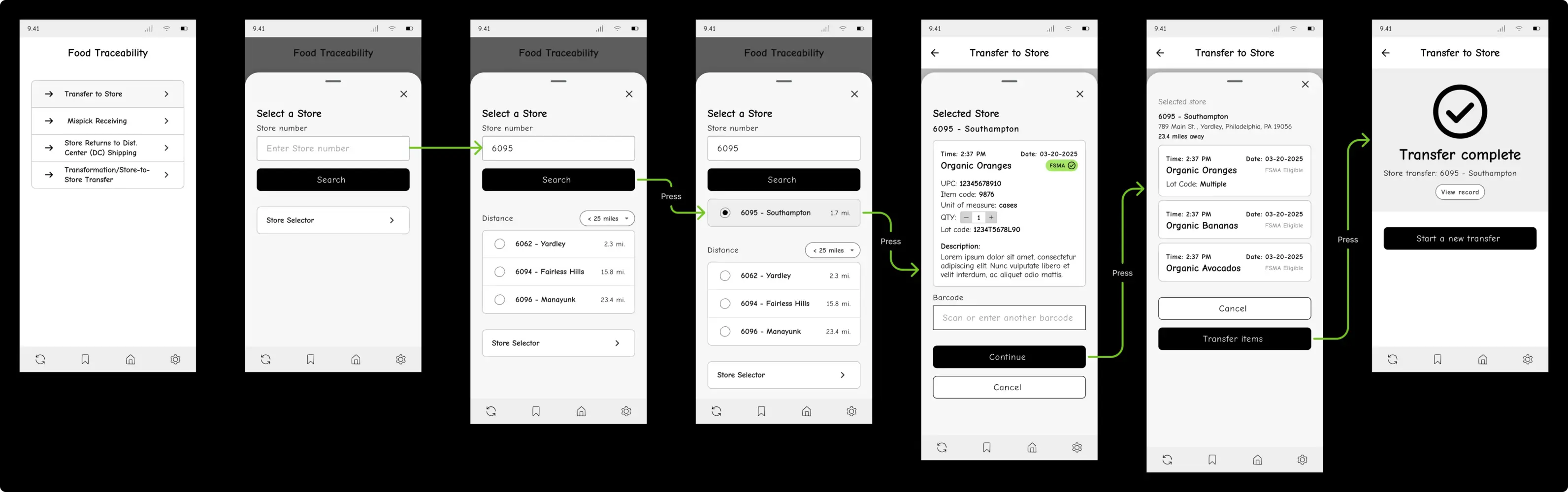
Item Management Transfer to Store User Flows

Phase 03

Hi-fidelity Mockups & Prototypes

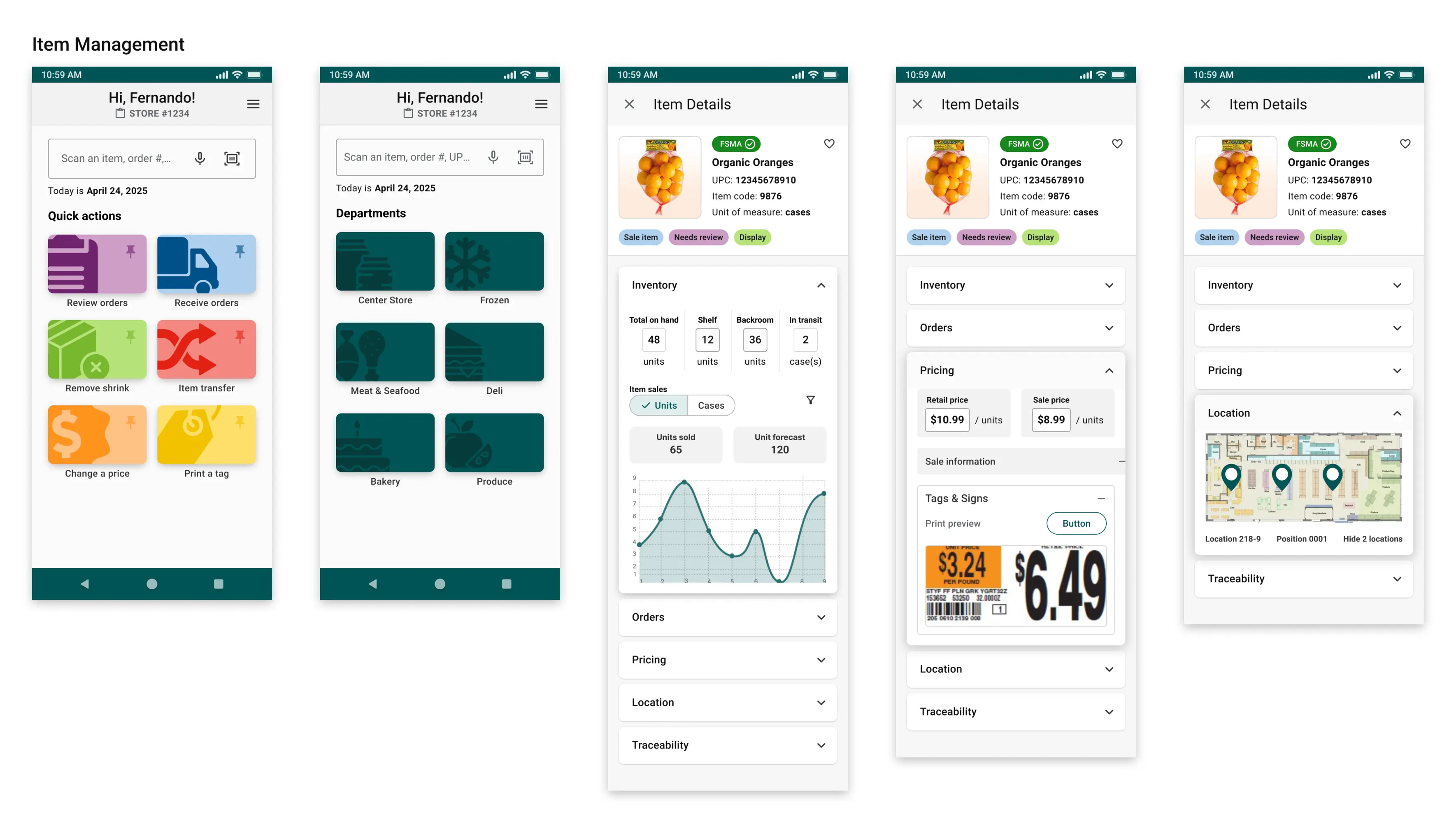
After iterating through multiple rounds of wireframes, we designed polished hi-fidelity mockups and presented them to stakeholders for review. We also built a set of interactive prototypes showcasing key user flow walkthroughs, allowing shareholders to experience the end-to-end item management process before development began.

User flow prototype showcasing FSMA traceability Store Transfer features

Item management hi-fidelity mockup of Item Detals flow

Impact

The Results

Through rigorous FSMA research, iterative wireframing, and stakeholder-validated prototypes, we delivered a redesigned item management system that simplified complex traceability workflows for 100,000+ employees across 9,551 stores. The new experience reduced task completion time, minimized compliance errors, and gave the organization confidence that it was fully prepared for FSMA Rule 204 enforcement.

Next Case Study

Brand Manager Console

A unified interface for managers to add and remove apps on store devices, manage user permissions, and monitor compliance across 9,551 stores.